Soft does not have to mean flat. That is the single sentence I would put on a poster above the grip rack if the studio manager let me. After eleven years of shooting everything from catalogue stills to cover stories, the 4×6 silk remains the modifier I reach for first when the brief asks for a portrait that feels like a person, not a product.
The problem with soft boxes.
A soft box is a known quantity. You put it at 45 degrees, you meter it, you get a predictable wrap. Predictable is safe. Predictable is also boring. The fall-off from a soft box is mathematically smooth — a cosine curve that wraps around the cheekbone, fills the shadow under the jaw, and flattens the very structure that makes a face interesting. On a clear day, when the sun is doing the work for you, a soft box fights the very light you are trying to harness.
A silk does something different. A 4×6 hard silk — ripstop nylon, not diffusion cloth — transmits about 60% of the incident light while scattering the rest. The key word is scattering. The light that comes through is not a smooth gradient; it is a field of micro-gradients. Each thread in the weave acts as a tiny lens. The result is a quality of light that wraps like a soft box but retains the micro-contrast that gives skin texture, that catches the edge of a jawline, that separates the subject from the background without a hair light.
Why 4×6 specifically.
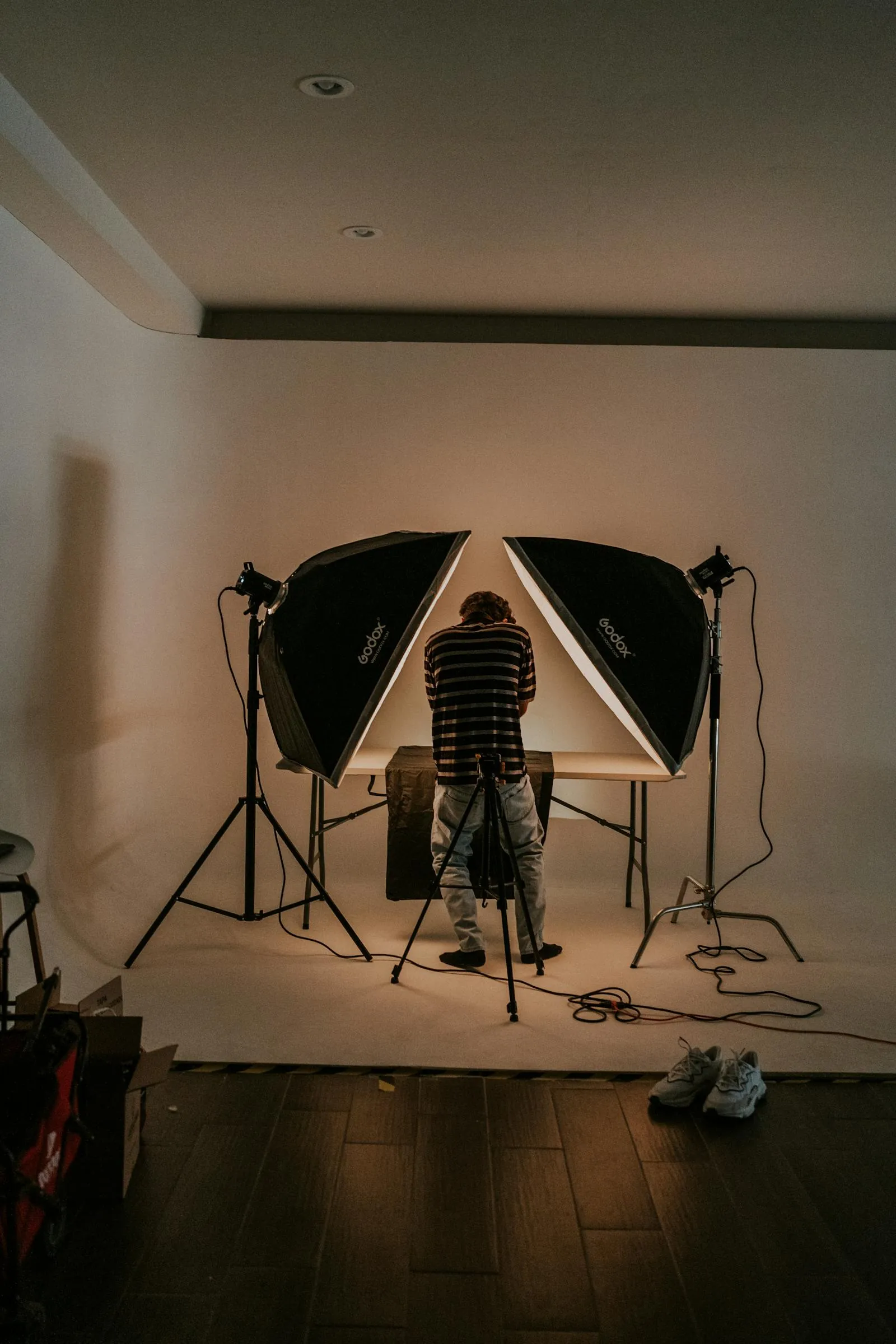
We have 6×6, 8×8, 12×12. The 4×6 hits a sweet spot for three reasons. First, it is light enough that one assistant can hold it on a C-stand arm for a half-day without fatigue. Second, the aspect ratio matches the 4:5 portrait orientation we shoot most editorial work in — the light feathering naturally matches the frame. Third, and this is the practical one: it fits in a standard grip case. Two 4×6 silks, two C-stands, two sandbags — that is a complete portrait kit that checks as carry-on.
Lighting spec
- KeyProfoto B10X · 1/4 power
- Modifier4×6 hard silk (ripstop nylon)
- Distance1.8 m from subject
- FillWhite V-flat · camera-left · 1 stop under
- BackgroundCharcoal seamless · 2 stops under key
- CameraPhase One IQ4 150MP · 80mm
- Exposure1/125s · ƒ/4 · ISO 200
- Colour refSlate-grey card · 5600K
The modification we make to every silk.
This is the part nobody talks about. A factory-fresh silk has a clean, even weave. After three shoots, the threads relax. After ten, the corners fray. We do not wait. The day a silk arrives, we run a 1/4-stop ND gel along the bottom 15 cm of the frame — a strip of Lee 209 taped to the back edge. Why? Because when you hold a silk at head height, the bottom edge lights the chest and hands brighter than the face. The ND strip feathers that fall-off so the exposure stays even from forehead to collar. It takes four minutes. It saves twenty in post.
Wind is not your enemy.
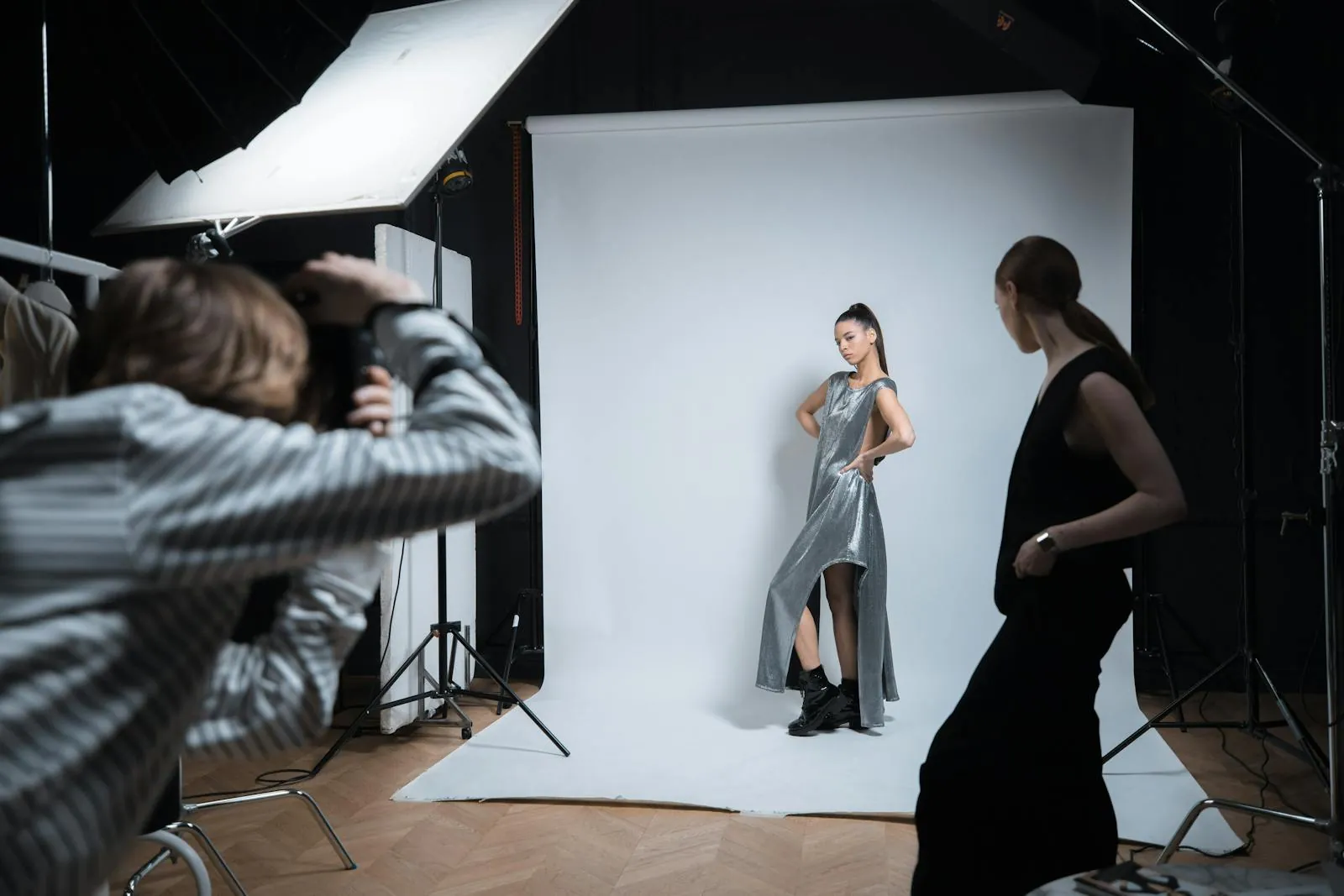
The rooftop shoot in the lead image? 22 km/h crosswind. The silk was moving. A soft box would have been a sail — dangerous, unstable, ruined. The silk? The ripstop weave lets air pass through. The light quality flickers, yes, but it flickers organically. The micro-movements create a living quality that no static modifier can replicate. We shot 36 frames. Frame 12 — the one where the silk caught a gust and bowed slightly — is the one the editor chose. The movement in the light became the movement in the portrait.
The best light is the light you did not fully control. — Joon Park, Partner · Director of Work
When we do not use a silk.
Fair question. We do not use a silk when:
- The brief demands clinical, repeatable, catalogue-flat light — e-commerce pack shots, product on white.
- The location has zero ambient fill and we need total control over contrast — then a beauty dish with a grid.
- The subject is moving fast — dancers, athletes — and we need a short flash duration with a hard edge to freeze motion cleanly.
But for 80% of the portraiture, editorial, and campaign work that lands on our desk, the 4×6 silk is the starting point. Sometimes we add a black flag on the shadow side to deepen the fall-off. Sometimes we bounce a V-flat for fill. But the silk stays.
The cost argument.
A Profoto 4×6 RFi Softbox is $1,400. A Matthews 4×6 frame with ripstop silk is $380. The silk gives you a larger effective source (the frame edge becomes the source), better wind handling, and that micro-contrast we talked about. The math is not close. We own six silks. We own one soft box — and it lives in the Berlin room for the rare product day when the client insists.
A note for the retoucher.
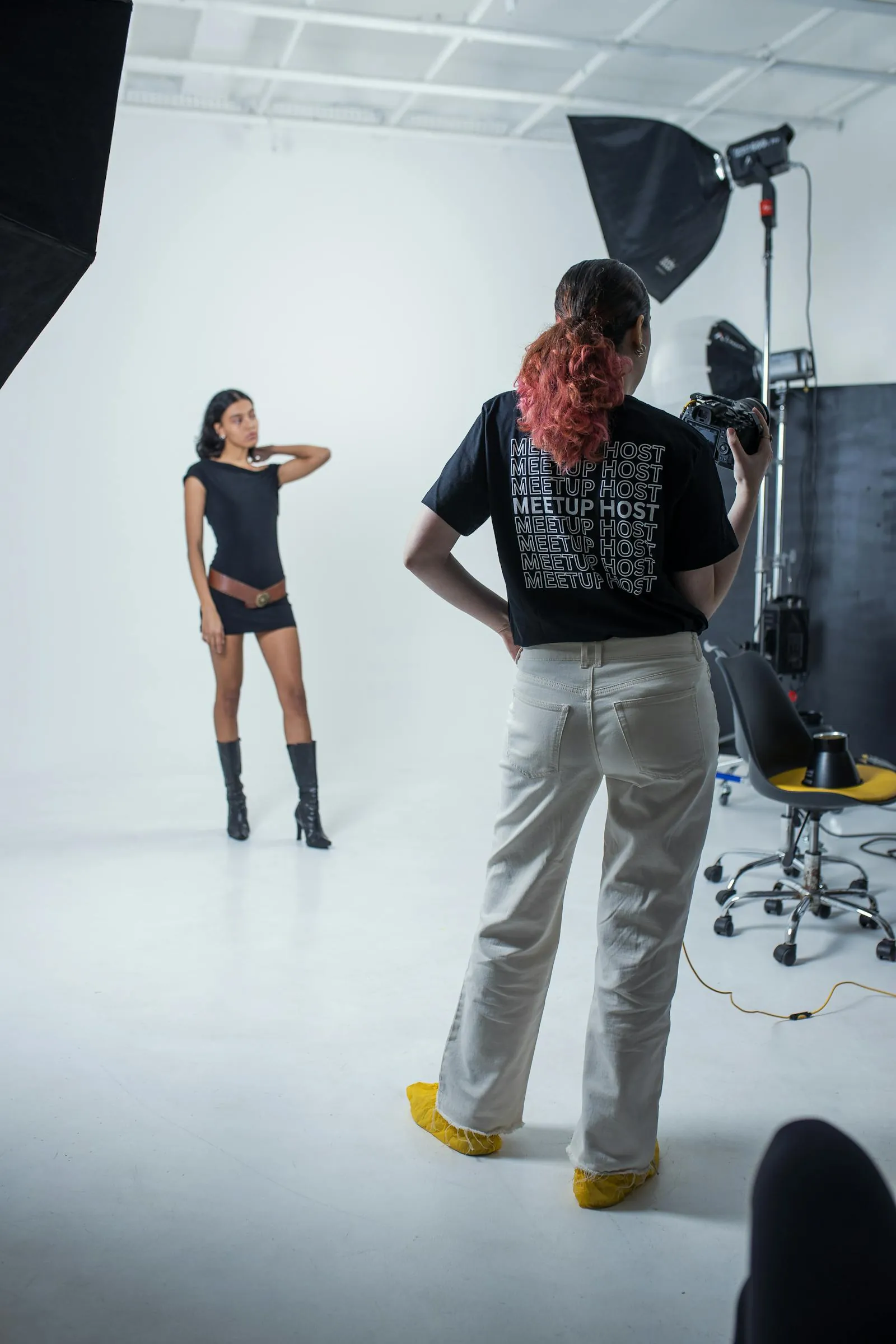
Rosa gets the selects with a colour note: "Silk texture — preserve micro-contrast on cheekbones. Do not smooth the fall-off at jawline." She knows the look. She has been with us since 2017. The silk gives her something to work with rather than something to work against. The texture is already there; her job is to decide how much of it serves the story.
The silk gives the retoucher something to work with rather than something to work against.
— Rosa Linder, In-house Retoucher · since 2017
The frame we keep.
Every silk shoot produces one frame where the light, the expression, and the movement align. We call it the silk frame. It is rarely the first frame. Rarely the last. Usually somewhere in the middle — frame 12, frame 18, frame 23. The third frame is usually the one, but with a silk, it is the frame where the wind did something we could not plan.
Next time you are on a rooftop at golden hour with a clear sky and a subject who knows how to stand still, put a 4×6 silk between the sun and them. Tape a strip of ND to the bottom edge. Let the wind do its thing. Shoot 36 frames. Thank me later.